
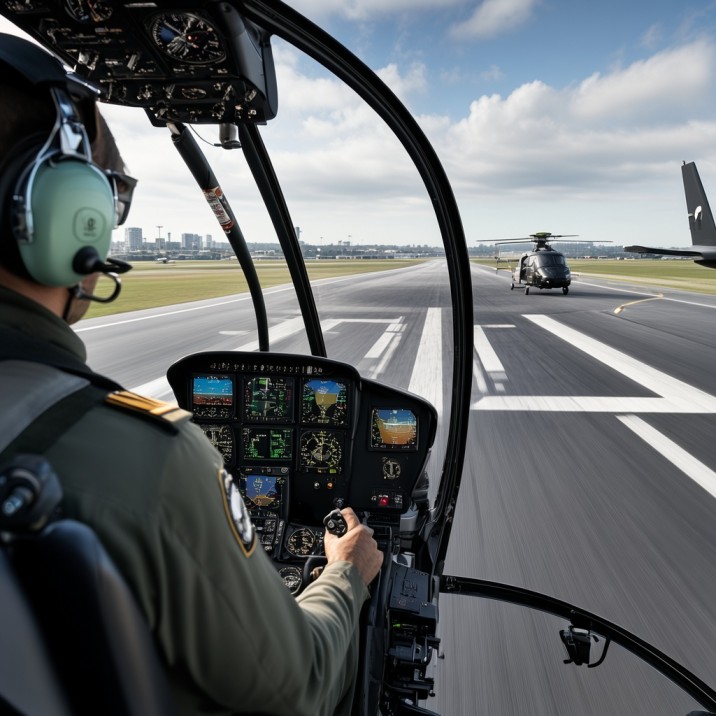
Helicopter Pilot
Explore the Helicopter Pilot career through an interactive simulation. Learn flight control, navigation, mission planning, and real-world aviation operations.
About This Profession
1. Job Description
A Helicopter Pilot operates helicopters for transportation, rescue missions, surveillance, emergency response, and other aviation operations. They are responsible for safely navigating flights, monitoring weather conditions, controlling the aircraft, and ensuring passenger and crew safety. Helicopter pilots must make quick decisions, communicate effectively with flight teams, and handle challenging flying environments with precision.
This experience introduces learners to helicopter operations, flight planning, navigation, and aviation safety while helping them develop problem-solving, decision-making, and AI skills through exposure to modern flight technologies and digital navigation systems.
2. Core Responsibilities
Flight Navigation & Control
Operate helicopters safely by managing altitude, speed, direction, and flight stability during missions.
Mission Planning & Execution
Plan routes, analyze weather conditions, and execute flight missions for transport, rescue, or surveillance operations.
Safety Monitoring & Risk Management
Continuously monitor aircraft systems and environmental conditions to ensure safe flight operations.
Emergency Response Operations
Perform rescue missions, medical evacuations, and urgent response tasks in critical situations.
Communication & Coordination
Maintain communication with air traffic control, ground teams, and mission command centers.
Aircraft Maintenance Awareness
Inspect helicopter systems and ensure readiness before and after flight missions.
3. Essential Skills
Aviation & Flight Knowledge
Understanding helicopter systems, aerodynamics, navigation rules, and aviation safety procedures.
Situational Awareness & Decision-Making
Ability to react quickly to weather changes, emergencies, and dynamic flight conditions.
Technical Control Skills
Managing cockpit instruments, navigation systems, and flight control mechanisms accurately.
Problem Solving & Focus
Handling unexpected challenges during flight with calm and precise decision-making.
Communication & Team Coordination
Working with control towers, rescue teams, and aviation staff during mission operations.
Frequently Asked Questions (FAQs)
1. What is a Helicopter Pilot Career?
A Helicopter Pilot Career involves operating helicopters for transportation, rescue missions, medical emergencies, surveillance, and other aviation services. Pilots are trained to handle flight controls, navigation, and safe aircraft operations in different weather and mission conditions.
2. What does a helicopter pilot do in real-world operations?
A helicopter pilot is responsible for flying the aircraft safely, planning routes, monitoring weather conditions, and completing missions such as emergency rescue, medical evacuation, cargo transport, and law enforcement support.
3. Why is a Helicopter Pilot Career important for the future?
The Helicopter Pilot Career is important because helicopters are essential for emergency services, disaster response, defense operations, and remote area transportation. The demand for skilled pilots continues to grow with advancements in aviation and emergency infrastructure.
Ready to Start?
Experience what it's like to work as a Helicopter Pilot and build future-ready skills through immersive gameplay.