
Electronics Engineer
Explore the Electronics Engineer career through an interactive simulation. Learn circuit design, electronic systems, troubleshooting, and engineering concepts while building AI skills for students.
About This Profession
1. Job Description
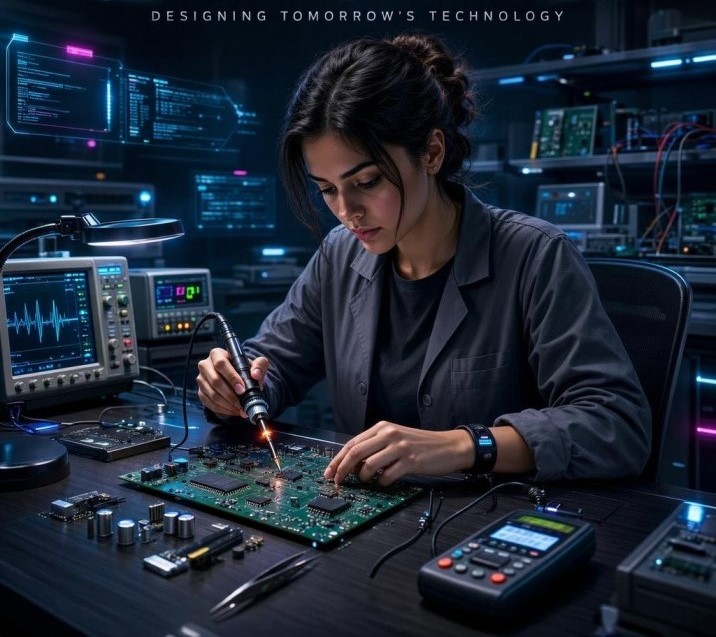
The Electronics Engineer Career introduces students to the exciting world of designing, developing, and improving electronic systems used in telecommunications, healthcare, automation, and consumer electronics. Through this interactive experience, students explore how engineers work with circuits, microchips, sensors, communication systems, and embedded technologies to create reliable electronic products.
As part of AI skills for students, learners gain hands-on exposure to engineering concepts while developing problem-solving and technical thinking abilities. This simulation is also aligned with Future Jobs Education for Kids, helping young learners understand how electronics engineering contributes to modern technology and innovation.
2. Core Responsibilities
Circuit Design & System Development
Design electronic circuits and systems used in devices such as smartphones, medical equipment, industrial machinery, and communication technologies.
Prototype Development & Testing
Build and test electronic prototypes to evaluate performance, identify technical issues, and improve overall functionality.
Troubleshooting & System Optimization
Analyze system faults, resolve technical challenges, and enhance the efficiency, reliability, and safety of electronic products.
Component Selection & Integration
Select and integrate components such as sensors, microcontrollers, resistors, and capacitors while ensuring compatibility with software and mechanical systems.
Performance Analysis & Quality Assurance
Conduct performance evaluations, verify system behavior, and ensure products meet engineering, quality, and safety standards.
3. Essential Skills
Electronics & Technical Knowledge
Understand electronic circuits, semiconductors, embedded systems, signal processing, and emerging technologies used across modern industries.
Problem Solving & Analytical Thinking
Identify technical issues, analyze performance data, and develop effective engineering solutions.
Technical & Software Expertise
Use electronic design software, simulation tools, testing equipment, and embedded technologies to create and optimize systems.
Attention to Detail & Precision
Review designs, components, and system operations carefully to maintain accuracy, reliability, and safety.
Communication & Team Collaboration
Prepare technical documentation and collaborate with engineers, developers, and production teams to deliver successful projects.
Frequently Asked Questions
1. What is Electronics Engineering?
Electronics Engineering is a branch of engineering that focuses on designing, developing, and testing electronic circuits, devices, and systems. It deals with technologies used in communication, computing, control systems, and digital devices that power modern life.
2. How does Electronics Engineering impact modern technology?
Electronics Engineering plays a major role in modern technology by enabling devices like smartphones, computers, medical equipment, robotics, and communication systems. It supports innovation in automation, artificial intelligence, and smart devices used in everyday life.
3. Why is Electronics Engineering important in today’s world?
Electronics Engineering is important because almost every modern system depends on electronic components and circuits. It powers industries such as healthcare, transportation, telecommunications, and automation, making modern life faster, safer, and more connected.
Ready to Start?
Experience what it's like to work as a Electronics Engineer and build future-ready skills through immersive gameplay.