
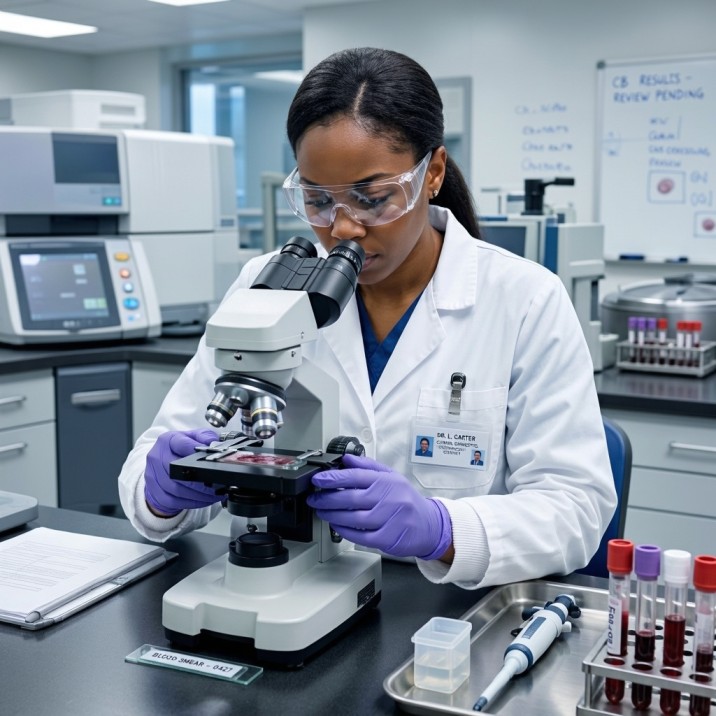
Clinical Diagnostics Scientist
Explore the Clinical Diagnostics Scientist career game and learn how laboratory testing, disease detection, and healthcare technology shape future medical careers. Build AI skills for students and discover future jobs education for kids.
About This Profession
1. Job Description
A Clinical Diagnostics Scientist Career involves analyzing patient samples and laboratory data to detect, monitor, and better understand diseases. These professionals use advanced diagnostic technologies and laboratory systems to support accurate medical decision-making and improve patient outcomes.
As students explore this career path, they develop valuable AI Skills for Students while learning how technology and data-driven diagnostics are transforming healthcare. This role also supports Future Jobs Education for Kids by introducing learners to careers that combine science, healthcare, and emerging diagnostic innovations.
Clinical Diagnostics Scientists play an important role in identifying infections, genetic disorders, cancers, and other medical conditions through precise laboratory testing, scientific analysis, and evidence-based reporting.
2. Core Responsibilities
Sample Analysis
Examining blood, tissue, urine, and other biological samples using specialized laboratory instruments and modern diagnostic technologies.
Disease Detection & Diagnosis
Identifying disease markers associated with infections, cancer, genetic conditions, and other health disorders to support accurate diagnosis.
Laboratory Testing & Validation
Performing, validating, and monitoring diagnostic tests to ensure reliability, accuracy, and compliance with healthcare standards.
Data Interpretation & Reporting
Analyzing laboratory findings, identifying clinically significant results, and preparing detailed reports for physicians and healthcare teams.
Quality Control & Safety Management
Maintaining laboratory quality standards, following safety protocols, and ensuring testing procedures meet regulatory requirements.
3. Essential Skills
Clinical Laboratory Knowledge
Understanding pathology, microbiology, molecular diagnostics, laboratory workflows, and medical testing procedures.
Analytical Thinking & Data Interpretation
Evaluating complex biological information and interpreting diagnostic data to support healthcare decisions.
Technical & Diagnostic Expertise
Using laboratory equipment, diagnostic instruments, and advanced testing technologies effectively and accurately.
Attention to Detail & Accuracy
Handling patient samples carefully while maintaining precision throughout testing, analysis, and documentation processes.
Communication & Team Collaboration
Working closely with doctors, laboratory professionals, researchers, and healthcare teams to support patient care and treatment planning.
Frequently Asked Questions (FAQs)
1. What is a Clinical Diagnostics Scientist?
A Clinical Diagnostics Scientist is a healthcare professional who examines blood, tissue, urine, and other biological samples to detect diseases, identify health conditions, and support medical diagnoses. They use advanced laboratory technologies, data analysis, and diagnostic tools to help doctors make informed treatment decisions. This career helps students build AI Skills for Students while exploring how technology is improving modern healthcare.
2. How do you become a Clinical Diagnostics Scientist?
To become a Clinical Diagnostics Scientist, students typically study biology, medical laboratory science, biotechnology, or related healthcare fields. Developing strong analytical thinking, scientific knowledge, and AI Skills for Students can help prepare learners for this career. As part of Future Jobs Education for Kids, this profession combines healthcare expertise with emerging diagnostic technologies and data-driven decision-making.
3. What skills do students need for a Clinical Diagnostics Scientist Career?
A successful Clinical Diagnostics Scientist Career requires laboratory science knowledge, analytical thinking, data interpretation, attention to detail, communication skills, and problem-solving abilities. Students who develop AI Skills for Students can better understand modern diagnostic systems and healthcare technologies, making this career an excellent example of Future Jobs Education for Kids in the growing medical and life sciences sector.
Ready to Start?
Experience what it's like to work as a Clinical Diagnostics Scientist and build future-ready skills through immersive gameplay.