
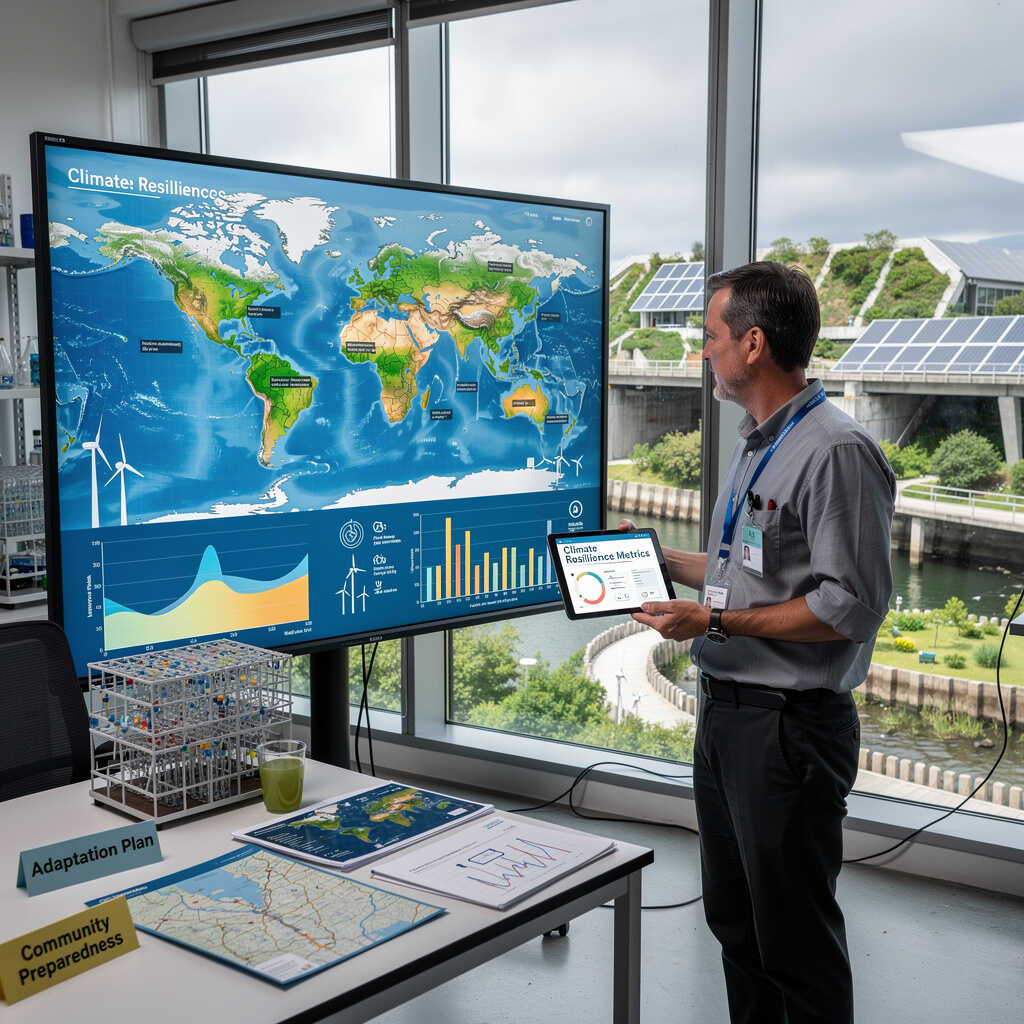
Climate Resilience Scientist
Explore the Climate Resilience Scientist career through an interactive learning experience that builds AI skills for students and introduces future jobs education for kids in climate adaptation, sustainability, and environmental science.
About This Profession
1. Job Description
A Climate-Resilience Scientist studies climate-related risks and develops strategies to help communities, ecosystems, and infrastructure adapt to changing environmental conditions. They analyze climate data, assess vulnerabilities, and design solutions that reduce the impacts of extreme weather events, rising temperatures, floods, droughts, and other climate challenges.
As environmental challenges become more complex, this field demonstrates how AI skills for students can be applied to climate modeling, predictive analysis, and data-driven decision-making. These technologies help scientists better understand environmental risks and develop effective adaptation strategies.
Climate-Resilience Scientists play a vital role in strengthening environmental sustainability and public safety by combining climate science, data analysis, risk assessment, and policy knowledge. This career aligns with the goals of Future Jobs Education for Kids, helping learners explore how science and innovation can address real-world environmental issues.
2. Core Responsibilities
Climate Risk Assessment
Analyzing climate trends, environmental data, and weather patterns to identify potential risks and vulnerabilities affecting communities and ecosystems.
Resilience Strategy Development
Designing adaptation plans and resilience measures that help reduce the impacts of climate change on infrastructure, agriculture, water resources, and public health.
Environmental Data Analysis
Collecting, interpreting, and modeling climate and environmental data to support evidence-based decision-making and long-term planning.
Disaster Preparedness & Adaptation Planning
Developing strategies to improve preparedness for extreme weather events, natural disasters, and climate-related emergencies.
Community & Infrastructure Resilience
Collaborating with governments, organizations, and stakeholders to strengthen the resilience of communities, ecosystems, and critical infrastructure.
Research & Innovation
Conducting research on climate adaptation technologies, sustainability practices, and innovative solutions that enhance climate resilience.
3. Essential Skills
Climate Science & Environmental Knowledge
Understanding climate systems, environmental processes, sustainability principles, and climate adaptation strategies.
Data Analysis & Modeling
Using climate models, geographic information systems (GIS), and analytical tools to evaluate climate risks and predict future impacts.
Problem Solving & Critical Thinking
Identifying climate-related challenges, assessing vulnerabilities, and developing practical adaptation and resilience solutions.
Risk Assessment & Strategic Planning
Evaluating environmental risks, creating mitigation strategies, and supporting long-term resilience planning efforts.
Communication & Collaboration
Working effectively with scientists, policymakers, engineers, community leaders, and environmental organizations to implement climate resilience initiatives.
Frequently Asked Questions (FAQs)
1. What does a Climate Resilience Scientist do?
A Climate Resilience Scientist studies climate-related risks such as extreme weather events, rising sea levels, and environmental changes. They develop strategies, policies, and sustainable solutions that help communities, ecosystems, and infrastructure adapt to climate challenges and build long-term resilience.
2. Why is Climate Resilience Science important?
Climate Resilience Science helps communities prepare for and respond to the impacts of climate change. By identifying environmental risks and developing adaptation strategies, Climate Resilience Scientists support sustainable development, protect natural resources, and improve the safety and well-being of people around the world.
3. Is Climate Resilience Science a good future career?
Yes, Climate Resilience Science is a promising future career. As climate change continues to affect communities and industries globally, there is growing demand for professionals who can develop innovative solutions to environmental challenges. This career offers opportunities to contribute to sustainability, disaster preparedness, and climate adaptation efforts that support a more resilient future.
Ready to Start?
Experience what it's like to work as a Climate Resilience Scientist and build future-ready skills through immersive gameplay.